


In our world, almost all people do not lead the most active lifestyle.This is especially true for people who work in an office or simply like to relax in front of the TV or computer.However, we rarely believe that this way of spending time often leads to osteochondrosis.
Sometimes the first signs of this disease appear as early as 25 years old, and if you do not immediately seek medical attention, serious complications arise.
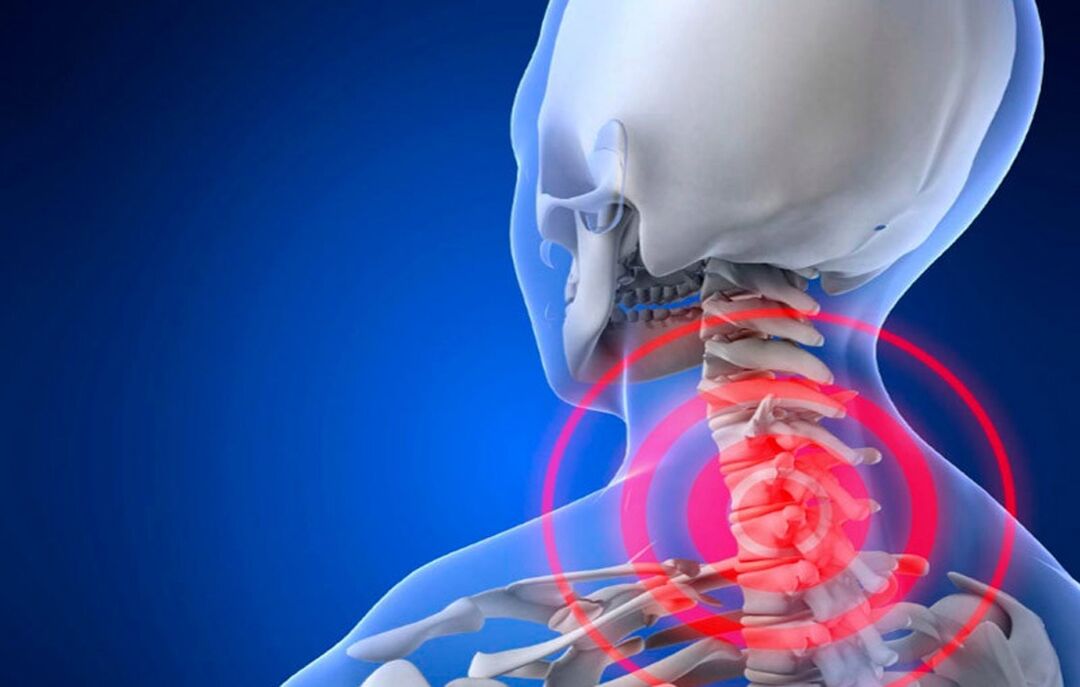
In this article we will consider such a disease as osteochondrosis of the cervical spine and talk about its stages, symptoms and treatment methods.We will also try to help by answering frequently asked questions from people suffering from the described disease.
Osteochondrosis of the cervical spine (osteochondrosis) is a lesion of a degenerative-dystrophic nature, the action of which damages the intervertebral discs and ultimately affects not only them, but also the cervical joints and the vertebrae of our skeleton.
Causes of osteochondrosis
The main reasons contributing to the occurrence of osteochondrosis are:
- poor diet and associated weight gain, which leads to increased stress on the spine;
- curvature of the spine, incorrect posture, myodynia, foot deformities;
- physical inactivity, lack of physical activity;
- damage to cervical vertebrae and spine;
- excessive physical activity for the body;
- tense environment at work and at home;
- pathological development of the cervical spine;
- Transmission of the disease through heredity.
For the reasons mentioned above, the cervical vertebrae are subjected to excessive stress, which leads to muscle spasms.This leads to circulatory problems, metabolic processes slow down and degenerative changes occur in the structure of the intervertebral discs.They begin to protrude beyond the spine, become thinner and change their appearance.
Osteochondrosis often occurs due to increasing discosis spreading to neighboring vertebrae.Discosis manifests itself after prolonged physical activity, during which the cervical and lumbar regions are intensely affected, but the thoracic region is not.
Stages of development of osteochondrosis
Osteochondrosis is a fairly common disease of the spine, the development of which occurs in several stages.Each stage is characterized by a number of specific symptoms and signs.
In total there are four stages of osteochondrosis of the cervical spine.
I'm graduating
As a rule, at the beginning of the disease, there is a slight smoothing of the curvature of the cervical spine, patients complain of pain, the intensity of which increases with head movement, and tension appears in the spinal and lumbar muscles.
First degree osteochondrosis can be cured without medication.At this stage of the disease, a diet low in salt, rich in vitamins and fiber, and therapeutic exercises can be recommended.
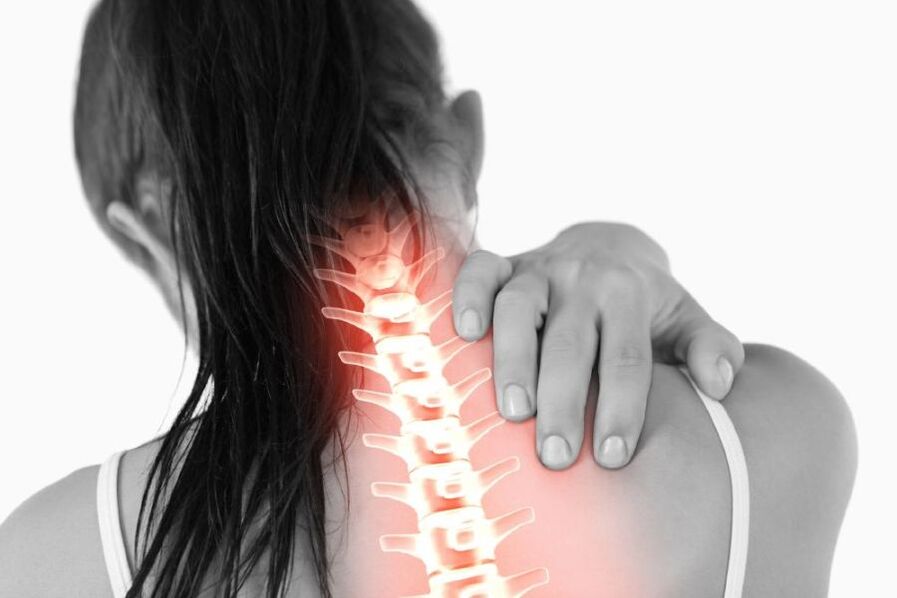
Osteochondrosis of the II degree
The next stage is characterized by instability of the cervical vertebrae, pain when turning and tilting the head increases, pain appears in the spine at rest, pain spreads to the upper limbs and shoulder girdle.
Clinical manifestations increase due to a decrease in the height of the cartilaginous intervertebral discs, which leads to compression of the nerves originating from the spine.In this case, patients note increased fatigue, reduced performance and absent-mindedness.
A headache occurs, accompanied by nausea.
Osteochondrosis of the spine III.degree
The pain in the neck and upper extremities becomes more intense and persistent.The tone and strength of the arm muscles decrease and numbness occurs in the fingers.Patients are worried about frequent headaches, dizziness and constant weakness.
At this stage, herniated discs form, the movements of the cervical spine are restricted, and their curvature practically disappears.
Osteochondrosis IV degree
In the final stage of the disease, the intervertebral discs are destroyed and the cartilage tissue of the intervertebral discs is replaced by connective tissue.Several segments of the spine are affected at the same time.
Patients experience various incoordination, tinnitus, increased dizziness, increased headaches, and pain in the neck and limbs.
Symptoms of cervical osteochondrosis
General symptoms
The disease can be recognized at the initial stage of its development by the following symptoms:
- Pain in the back of the head, neck, shoulder joints, forearm;
- pain, weakness in arms;
- Pain and grinding when turning the head;
- increased fatigue, lack of muscle tone;
- Deterioration of vision and hearing, dizziness, loss of tongue sensitivity.
The most common sign of osteochondrosis of the cervical spine is dizziness, which is accompanied by noise and pain in the ears, reduced hearing, disorientation in space, nausea and vomiting.
When prescribing treatment for osteochondrosis, additional methods of treating the above symptoms are not used.To prescribe appropriate treatment, you must consult a therapist.In this situation, treatment with folk remedies can not only be ineffective, but also harm the patient.
One of the consequences of the development of osteochondrosis, especially in the fairer sex, is frequent and painful migraines.Headaches can occur several times a day and can cause distressing and painful feelings.
diagnosis
To study cervical osteochondrosis in medicine, the following methods are used:
- Radiography.It is used to diagnose and study the internal structure of objects.This technique is particularly unproductive in the final phase;
- Magnetic resonance imaging.The system is able to look at the bone structure, herniated discs and their size.
- Computed tomography.Less effective than magnetic resonance imaging.Hernias are very difficult to detect.It is the most important tomographic method for analyzing internal organs.
- Ultrasound duplex scanning.This method is used in those moments when there is a violation of blood flow in the aorta.With this method it is possible to detect circulatory disorders.

Treatment of osteochondrosis of the cervical spine
We treat right.Currently, there are many different methods of treating such a common disease as osteochondrosis of the cervical spine.We are talking about the use of medications, physiotherapy, therapeutic exercises and, of course, massage of the neck and collar area.
The massage serves to improve the blood supply to the brain.In addition, we must not forget about proper nutrition.All these methods must be correctly combined in order to achieve a concrete, tangible result in the fight against this disease.
This disease affects both sexes equally, but women are more likely to suffer from headaches and numbness in the extremities.However, the treatment is the same for men and women.Both are prescribed the same medications and exercises.How you can help yourself when the pain is very severe
Medication
Nonsteroidal
Nonsteroidal anti-inflammatory drugs include, for example, medications that relieve pain, swelling and inflammation of the damaged nerve.
Vitamin B
Medications containing vitamin B also help with treatment.They improve metabolic processes in nervous tissue.
Chondroprotectors
With the help of chondroprotectors, cartilage tissue can be restored.
Rheological agents
In addition, to accelerate treatment, it is necessary to improve the rheological properties of the circulatory system.
Muscle relaxants
Muscle cramps can also be relieved with the help of muscle relaxants.
Injections
There are many ways to treat this disease.One of these is drug treatment with tablets.However, it will be most effective if the patient begins to combine taking the pills with other treatment methods.
To do this, you need to consult a doctor who will determine the stage of the disease and prescribe methods for its treatment.
One of the most common additional treatments is injections.This way you can influence the nerve endings.In addition, the injections do not cause any major side effects.The only downside to this method is that it is painful.
Treatment can be done with the following injections:
- intramuscularly (such injections strengthen the body and relieve inflammation);
- Blockages on the sore spot (this is the most effective method).
We use physical therapy
Electrophoresis and medication: Thanks to electrical impulses, the medication quickly reaches the desired area of action.This type of physiotherapy is carried out using aminophylline or novocaine, the former improves blood circulation, the latter relieves pain.
Ultrasound influence: stimulates metabolism and associated processes.Helps relieve pain, relieves inflammation.
Magnetotherapeutic effect: helps with swelling, relieves pain.
Laser therapeutic effect: Helps to relieve inflammation, improves the functions of the circulatory system.
Home treatment
Home treatment methods are only an addition to the complex prescribed by the doctor and do not help to completely eliminate the disease.Before treating osteochondrosis at home, be sure to consult a doctor so that he can make a diagnosis and prescribe the necessary medications.
It is the doctor who must decide how to treat osteochondrosis of the cervical spine at home
For home treatment are used: recipes of traditional medicine (to relieve pain and muscle tension, to improve blood circulation), physiotherapy, as well as a mandatory massage of the neck and collar area at home.
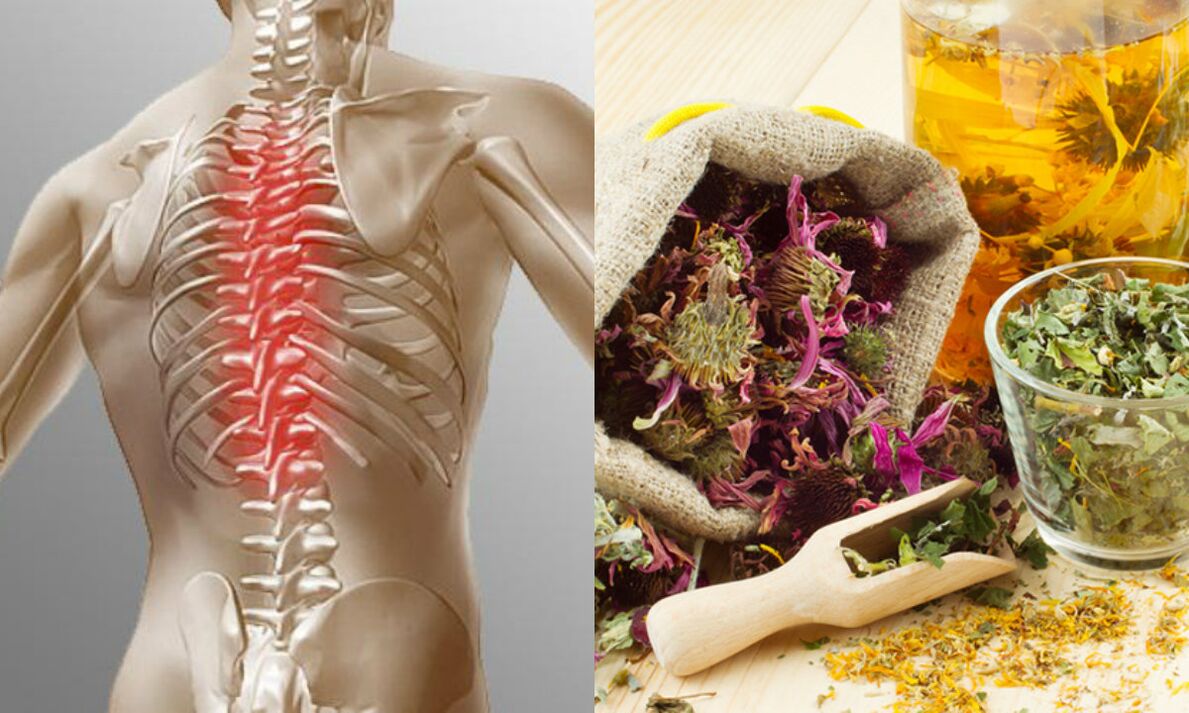
Traditional recipes to relieve pain in the neck area:
- Place a horseradish leaf on the inside of your neck and secure it with a bandage or breathable fabric.Before use, scald with boiling water and allow to cool to room temperature.It is advisable to do this before going to bed and leave the bandage on throughout the night.
- Chop the potatoes finely and mix in equal parts with honey.The mixture will have an ointment-like consistency.Use as a compress at least once a week.
- Warming up relieves the pain well.For this purpose, you can use mustard plasters, a bag of heated sand, pepper plasters or alcohol.
Often, patients begin searching for ways to treat or relieve pain on various forums and similar sources.It should be noted that not a single forum and its visitors are able to correctly diagnose the stage of the disease and methods of treatment.
The question of whether osteochondrosis can be treated in your case and how it should be done should be decided by a qualified doctor based on the diagnosis.
Therapeutic massage
Massage is used to maintain muscle tone and also helps with pain.The main massage technique is chosen depending on the stage of osteochondrosis, but the standard techniques always remain unchanged.
These include rubbing, stroking, kneading and others.If a patient complains of pain only on one side of the collar area, massage measures begin on the opposite side and only then the painful area is treated.
Neck massage can be easily done at home, but it should be done very carefully so as not to cause harm to the patient.The patient must lie down and place his forehead on his hands while pulling his chin to his chest.The neck muscles must be relaxed.
Stroke
You need to start the massage with strokes in the collar area and then move towards the collarbone and armpits.Then flat and comb-like strokes are added.
Push-ups
After stroking, the masseur begins pressing.The technique is as follows: the hand must be placed over the neck and moved down along the spine, connecting the index finger and thumb.You can also do push-ups with the edge of your palm up to your shoulder joint.
Rub
Rubbing warms and relaxes the muscles, improving blood circulation.You need to start at the base of the skull.Finger movements should be circular and straight.Sawing movements are also acceptable, but the palms of the hands should be parallel to each other.
Knead
After rubbing comes kneading.It is recommended to apply it to the cervical spine with circular movements.
The massage always ends with stroking and vibration.Shaking and tapping creates a vibration.

Prevention
Osteochondrosis of the cervical vertebrae can be cured, but it is better to prevent such a disease.Prevention requires many steps, but this is much better than possible surgery.
For prevention, the following measures must be taken:
- exercise regularly (preferably swimming. When working sedentary, it is necessary to do warm-up exercises during the working day);
- Consume large amounts of magnesium and calcium (fish products, legumes, sour milk dishes are suitable. Hot peppers, salty foods and sugar, grapes and baked goods, as well as smoked foods are prohibited);
- Sleep on a comfortable pillow and mattress.
Osteochondrosis can occur in people of any age, but the above rules will help avoid it.
This disease can be cured through medical interventions, but it is better to carry out regular prevention at home.In addition, such a disease can be cured even without surgery.
In this case, in addition to the above exercises, taking medication and massage is necessary.